In development
Agenhumos
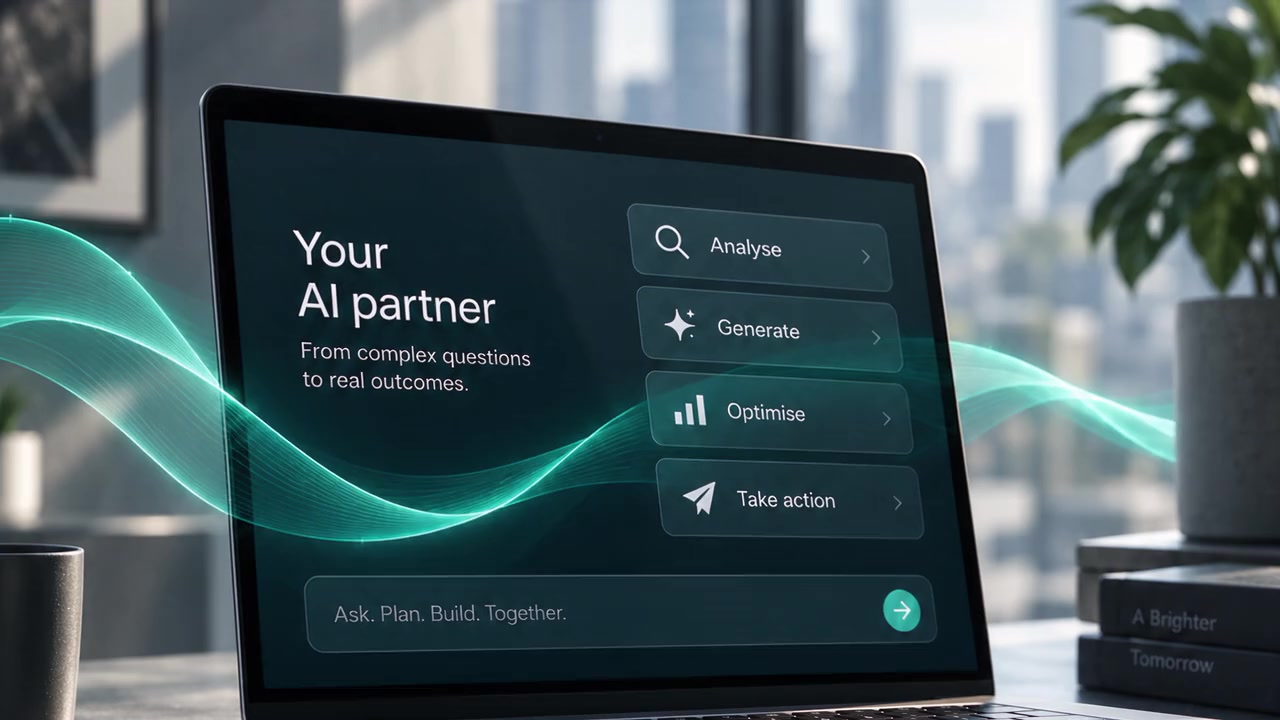
An agent–human operating system for companies.
Most “AI for work” stops at a chat box over a wiki. This starts by making the company itself legible to software.
Every tool, every record, every relationship — connected once, then indexed for recall and mapped into a graph for judgement. On that substrate every person gets an agent that can read the record and drive the software. What the system learns is not the process in the handbook; it is the one people actually run.
- Status
- In development, and ours outright
- Shape
- Plugins, a permission-aware index, a knowledge graph
- The rule
- The agent drafts; a human commits
How it works
Tools are wired in through plugins. Where a system has an API, it is used; where it has none — the internal tool somebody built in 2019 that the business quietly runs on — the agent drives the interface a human would drive. What comes in lands twice: in a vector index so anything can be found by meaning, and in a graph of entities and the relationships between them. A document search can tell you what a page says. It cannot tell you the page is stale, that its owner left, or that the process it describes is the one that keeps failing — those are relationships, and relationships live in a graph.
The hard part is permissions, not retrieval: pool a CRM, a chat history and a document store into one index and you have built a machine that can leak, so each source system's access rules travel with every chunk and retrieval filters by the asking person's rights at query time rather than at ingestion. Nothing reaches a system of record without a human — the agent drafts, assembles and prepares, then waits. Two pieces exist today, and they are the two ends of that loop: a capture pipeline that turns a narrated screen recording into a replayable agent skill, and a deterministic navigation graph that lets an agent drive a web application it was never given an API for. The middle is the work.
Want this shape of work?
Every project here took the same path: proven fast, hardened through an automated pipeline, then owned for its life. If that is the shape of the problem you have, the fastest way to find out is a conversation.